
Name
Arizona State University
Domain
Education
Timeline
4 months
Role
UX Researcher & UI Designer
Tools


Crafting Excellence

The UX Portfolio Study at ASU
Objectives
Identify pain points and frustrations in ASU student’s portfolio development journey.
Propose a centralized digital portal integrating resources, feedback channels, and templates.
Test the prototype’s usability and alignment with student needs.
Result
100% completed tasks in <4 minutes.
50% reduction in time spent searching for resources.
30% increase in portfolio submission rates for internships.

01
Explore Other Projects


Project Overview
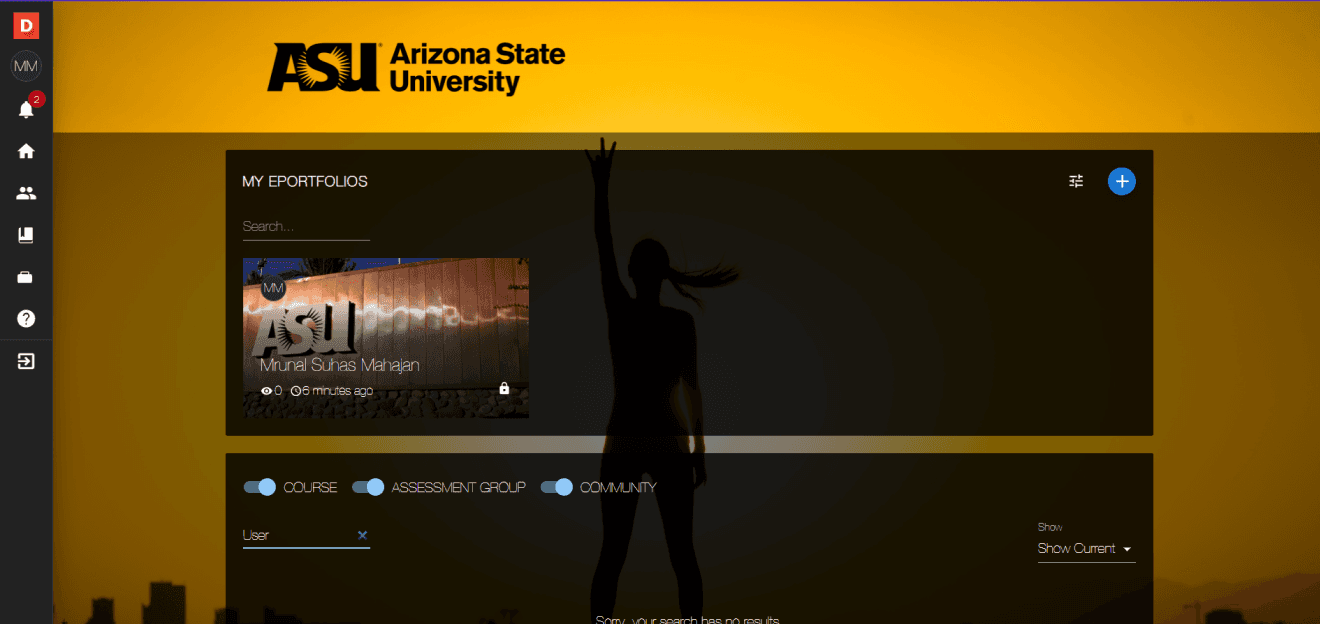
ASU’s UX graduate students lacked a unified platform to access portfolio-building resources, mentorship, and industry-aligned design templates. This fragmented ecosystem led to inconsistent portfolio quality, reduced confidence in job applications, and missed networking opportunities.
I spent hours switching between Behance, Dribbble, and Slack just to find inspiration and feedback. It felt like ASU left us to figure it all out alone.
- A graduate student
Research and Design
Redesign Process

Empathize
Define
Ideate
Prototype
Test
User Research
Semi-Structured Interviews
Data Synthesis
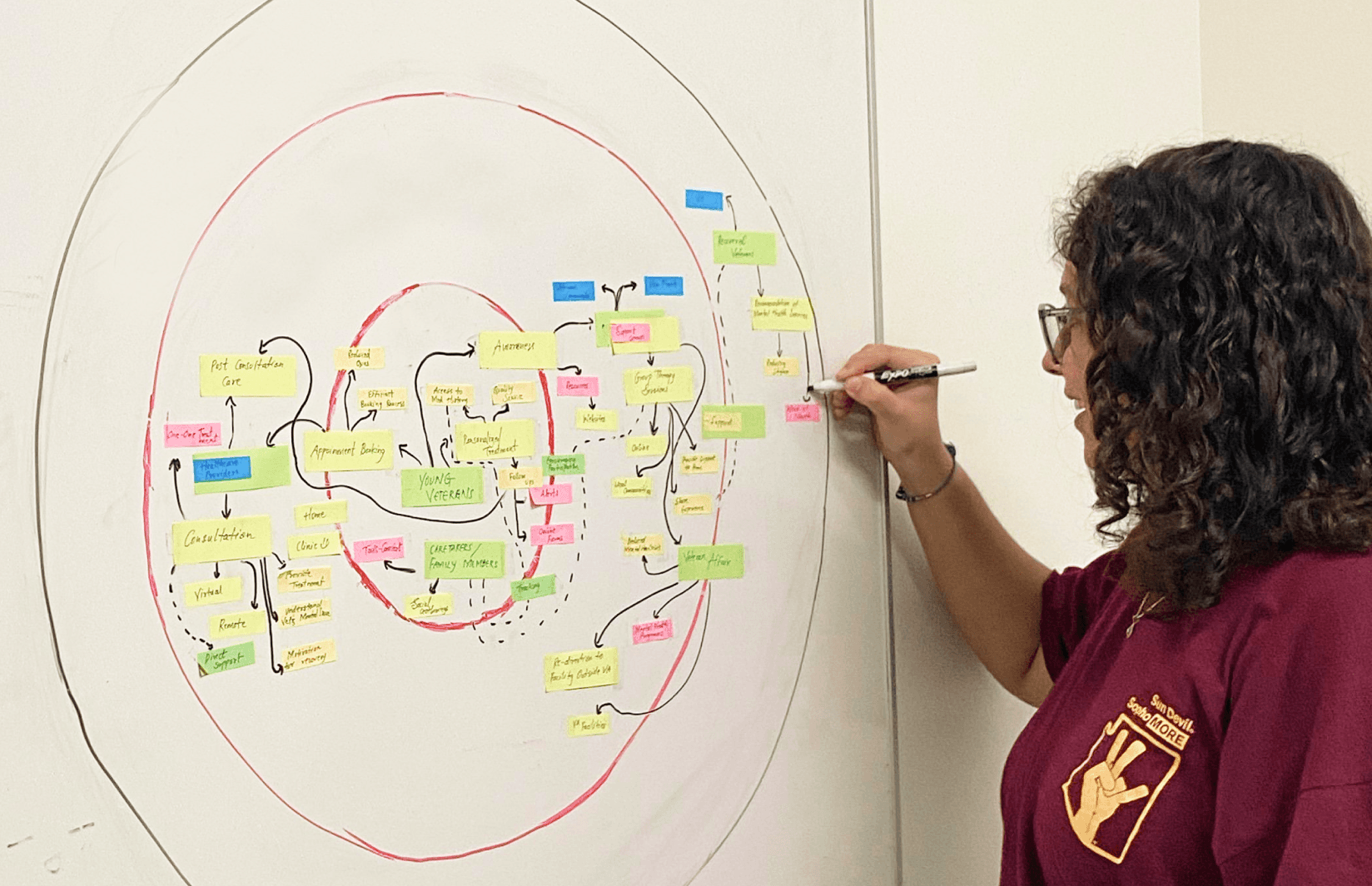
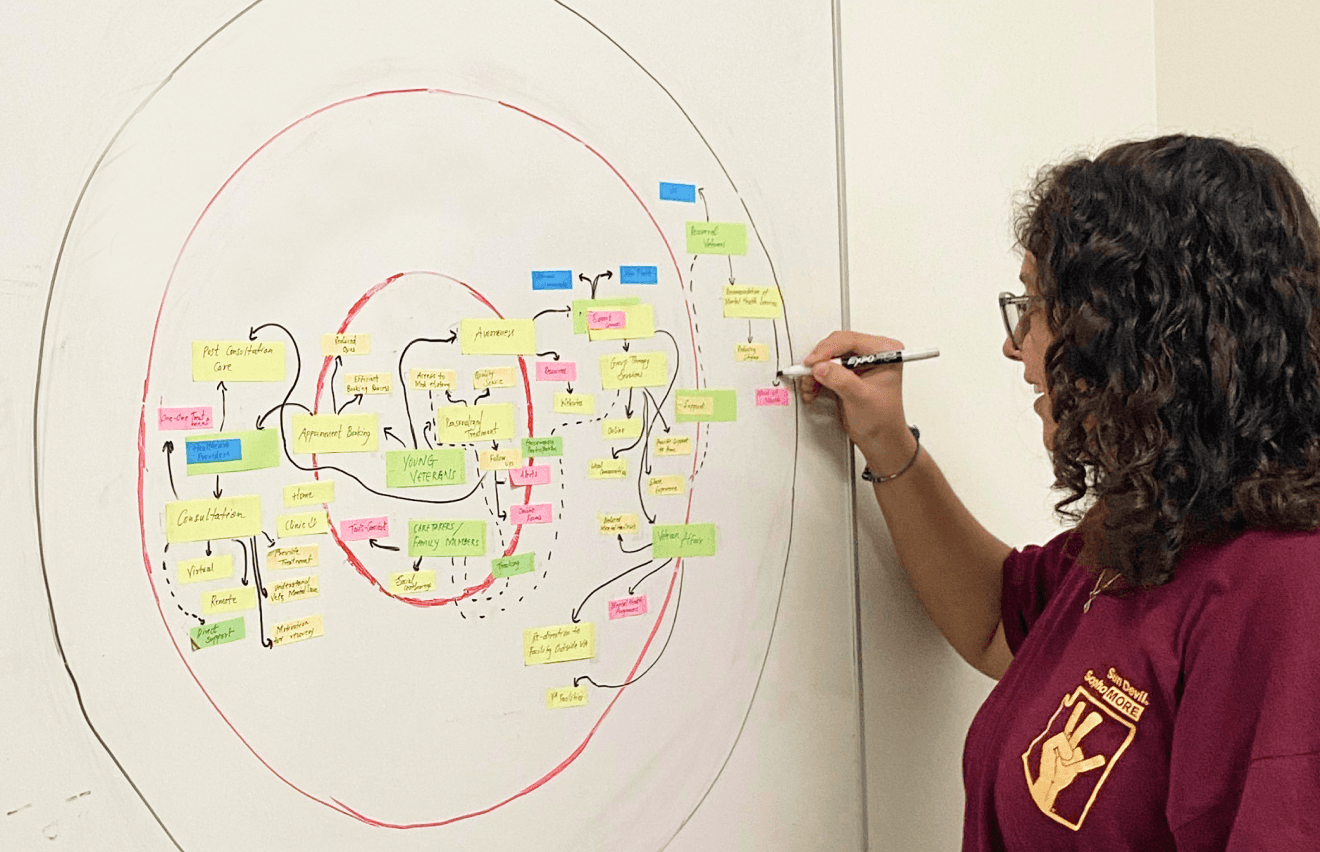
Journey Mapping
Brainstorming
Information Architecture
Wire- framing
High-Fidelity Prototype
Usability Testing
Reflect and Reiterate
Research Methodology
We employed a mixed-methods approach combining semi-structured interviews contextual inquiry, and competitive analysis
User Research
We initiated the process with a comprehensive user research phase, aiming to deeply understand the experiences, frustrations, and aspirations of UX students at ASU.
Semi-Structured Interviews
Conducted in-depth interviews with 6+ participants from the UX program. Gathered individual perspectives, experiences, and specific challenges in UX design.
Contextual Inquiry
Observed students using 7+ external platforms (Pinterest, UX Planet) for inspiration, leading to cognitive overload, struggled to apply styles coherently.
Empathize
Understanding the User Landscape
Observations
One participant bookmarked 23 design portfolios but struggled to apply styles coherently.
Another participant initially texted 30+ peers and mentors but, became frustrated due to delayed feedback.
Key Findings
4/6 participants struggled to find ‘trustworthy design inspiration’ beyond Behance/ Dribbble.
3/6 highlighted the absence of ASU-specific guidelines or templates.
5/6 requested centralized feedback systems.
It became clear that students felt adrift, searching for guidance in a sea of generic online portfolio resources.
- Graduate UX Researcher
“
“
Define
Pinpointing the Core Problem
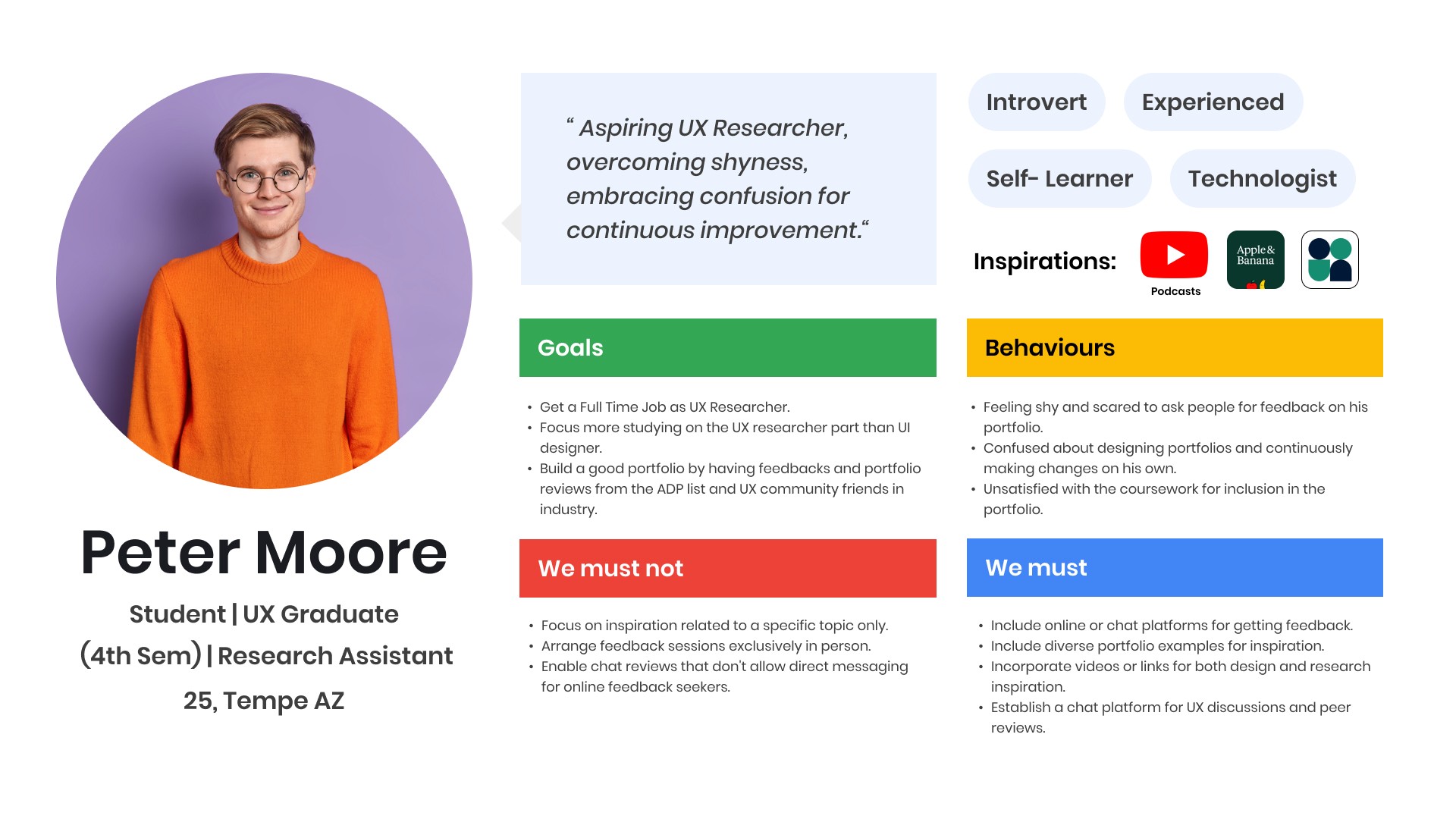
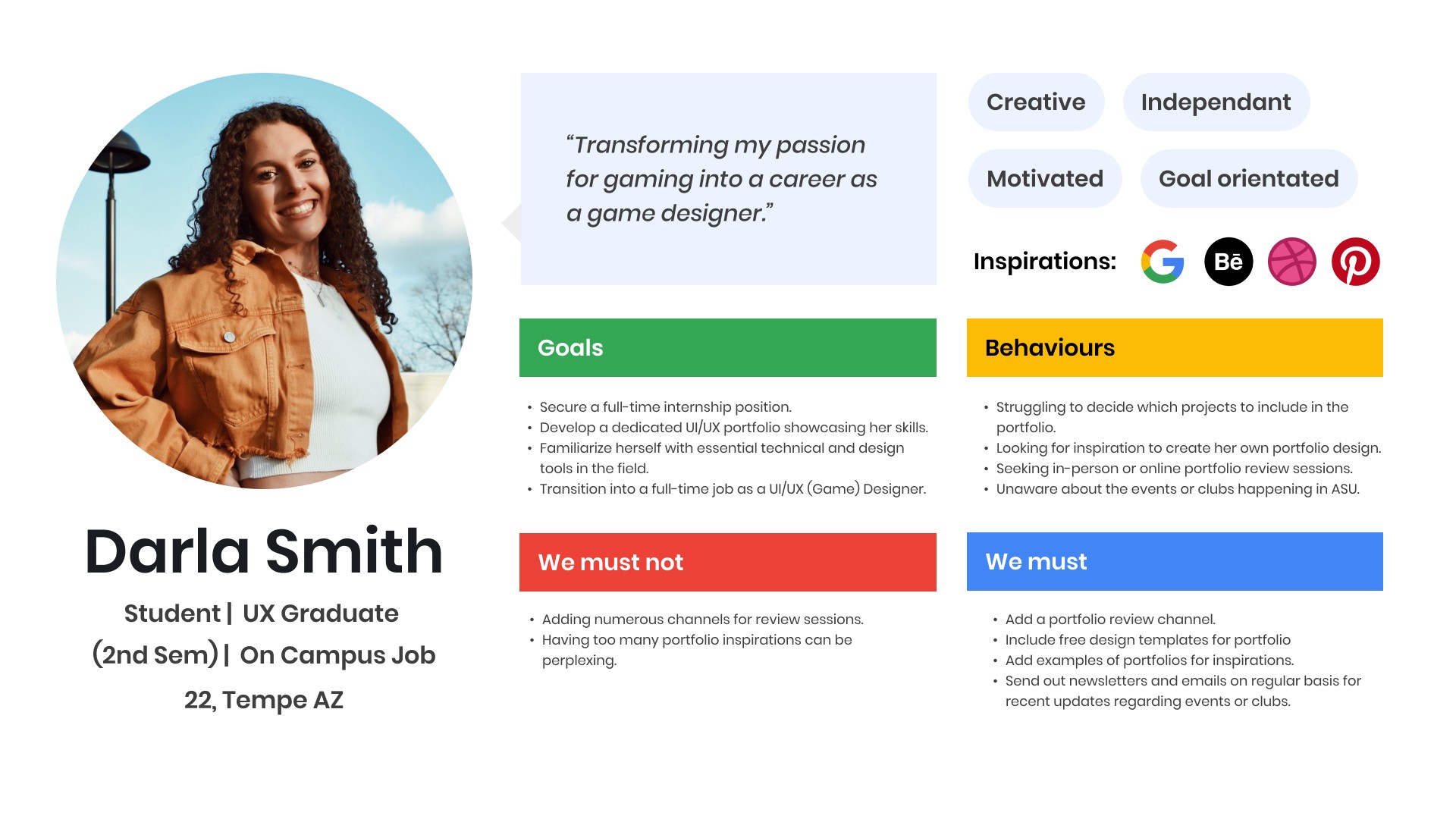
Personas
Created two representative personas to embody the needs and motivations of target users
Data Synthesis:
We meticulously analyzed the data gathered during the empathize phase to identify recurring themes, patterns, and key insights.
"Peter is an experienced student ready to dive in the professional world but, getting confused where to start."
"Darla represents the newcomer, eager but overwhelmed. Her needs helped shape the resource library."
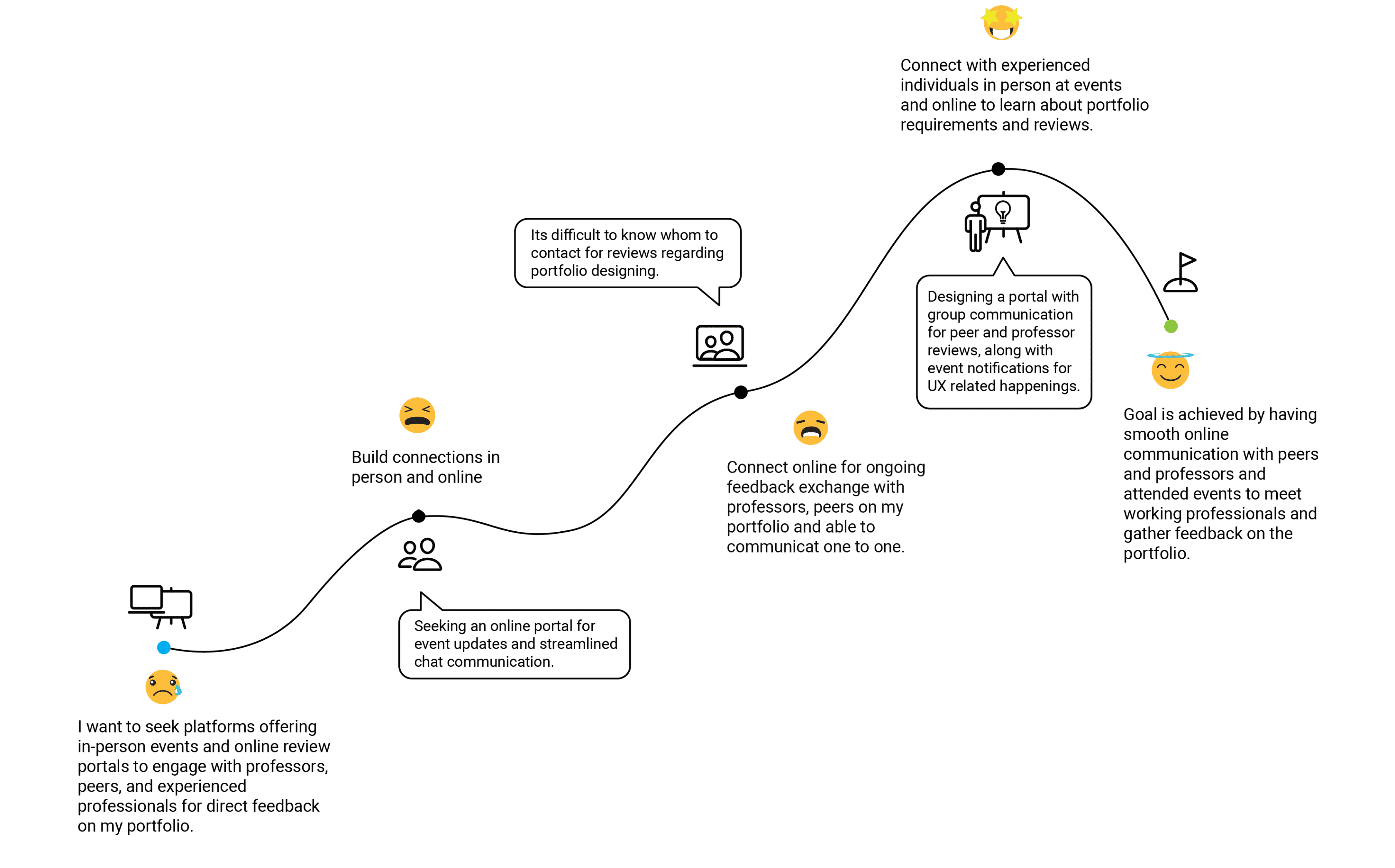
Journey Mapping
Discovery Phase: Students spent 3–5 hours weekly searching for inspiration across fragmented platforms.
Creation Phase: Lack of ASU guidelines led to inconsistent prioritization of projects.
Feedback Phase: Reliance on informal Slack groups caused 7–10 day delays.
Concept Story
As a UX graduate student seeking an internship, I want to discover platforms for in-person events and online portfolio reviews. So that I can connect with professors, peers, and professionals for feedback and insights. When creating my website, I will refine my portfolio and stay informed about UX events for meaningful discussions.
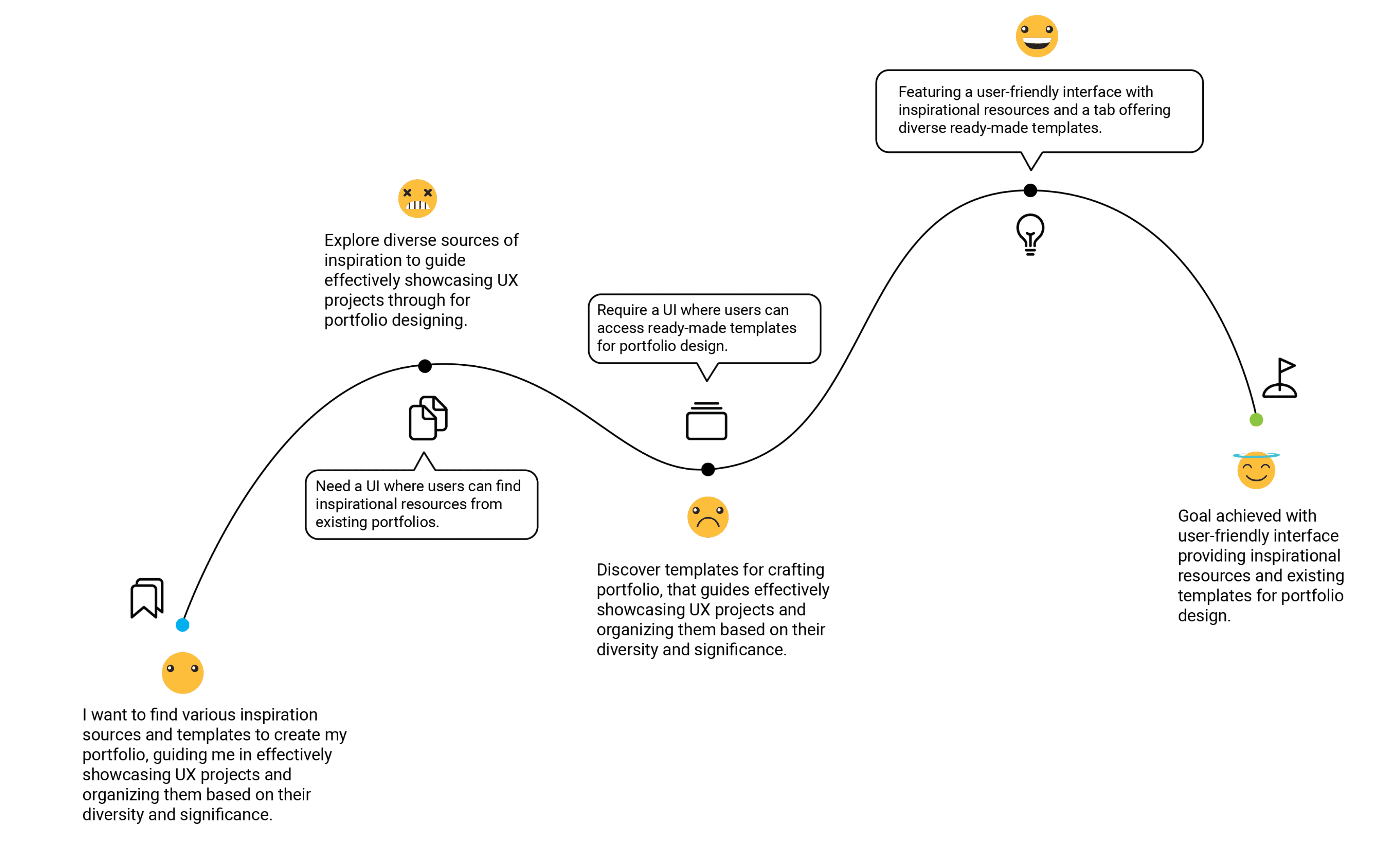
As a UX second-semester graduate student, I want to explore diverse inspirations and templates to structure my portfolio effectively. So that I can showcase a range of UX and design projects with clarity and impact. When seeking inspiration, I will craft a distinctive and engaging online portfolio.
Key Findings
100% of participants used 3+ external tools, increasing cognitive load.
Peer reviews took 7–10 days via email, hindering iteration.
67% missed UX club meetings due to unclear notifications.
Design
Bringing the Ideas to Design Guide
Ideate
Brainstorming Potential Solutions
Roboto
Regular
Medium
SemiBold
Bold
Typography
Default
Hover
Clicked
Icons
Profile
Home
Notifications
Inspirations
Templates
Help
History
Edit
Like
#FFFFFF
#FFF0C5
#FFCB25
#901340
Color Scheme
Option 1
Option 2
Action Buttons
Option 1
Search
Brainstorming
Held collaborative brainstorming sessions to generate a wide range of potential solutions to address the identified pain points.
MoSCoW Method
Prioritized ideas based on their potential impact and feasibility (Must-Have, Should-Have, Could-Have, Won't-Have).
Must-Have:
Template and Inspiration library along with filters.
Should-Have:
Feedback portal and direct messages portal.
Information Architecture:
Defined the structure and organization of content within the proposed platform.
"We sketched, debated, and refined until we had a clear vision of Portfolio Pathways."
- Me and my peers
“
“
Prototype
Bringing the Vision to Life
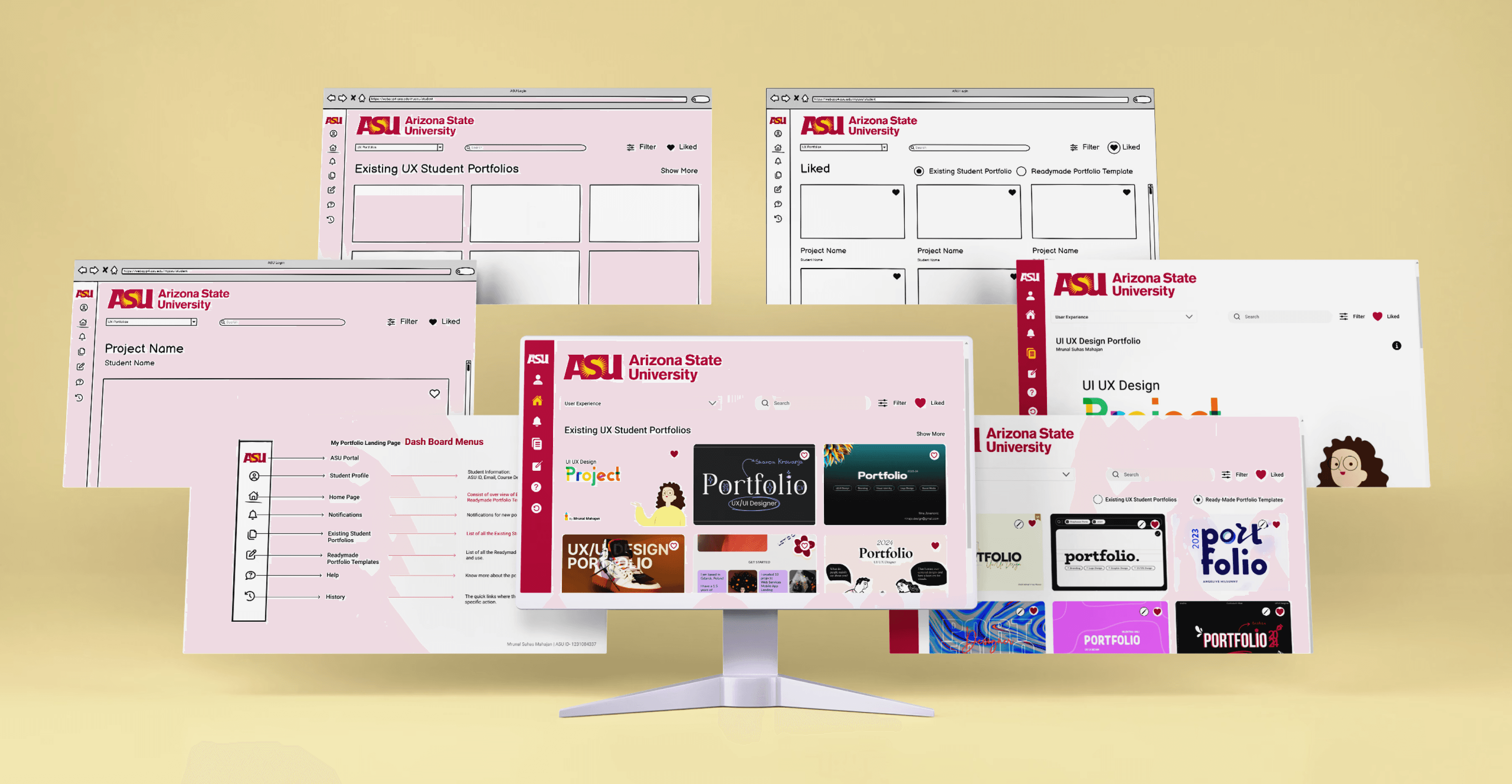
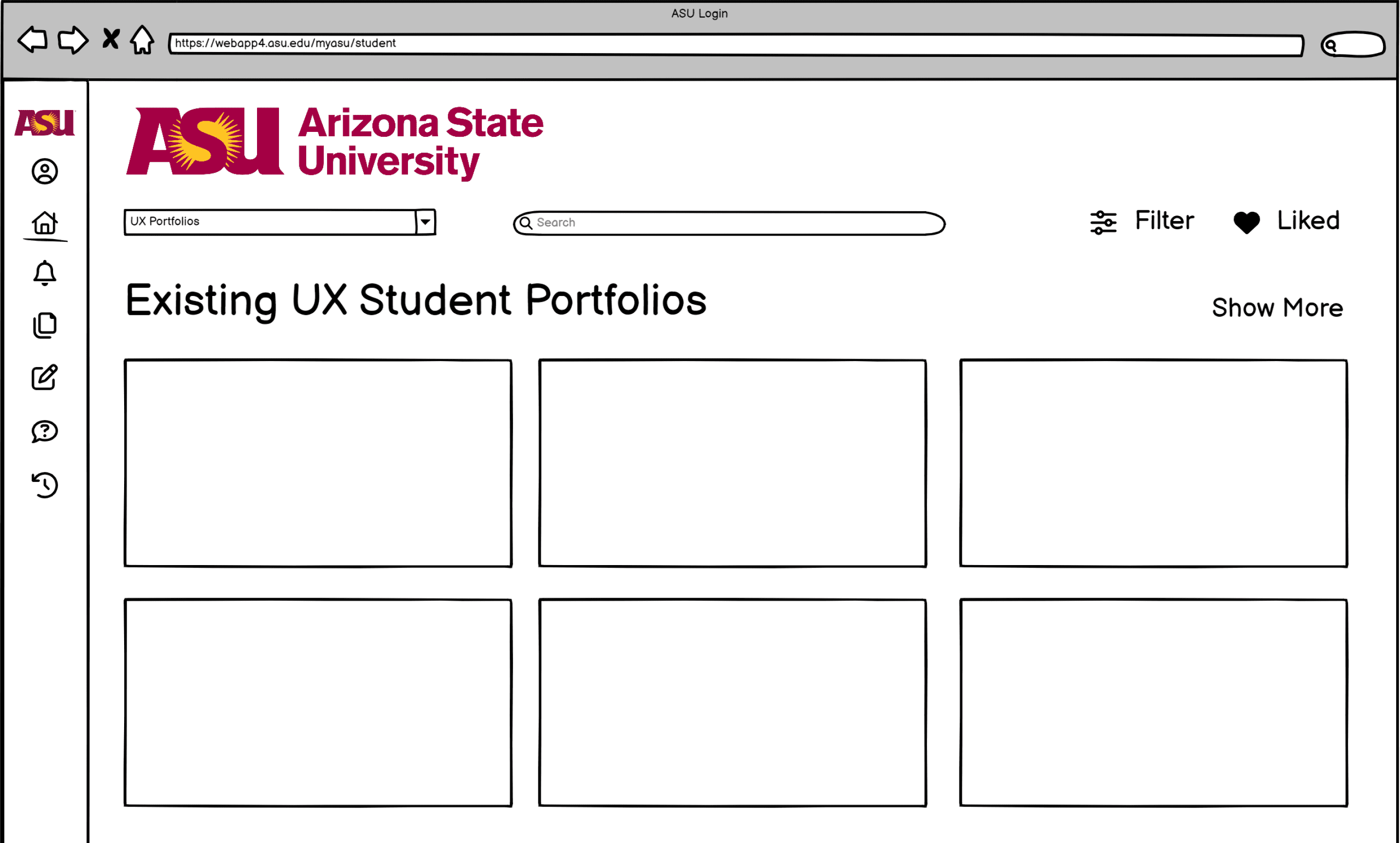
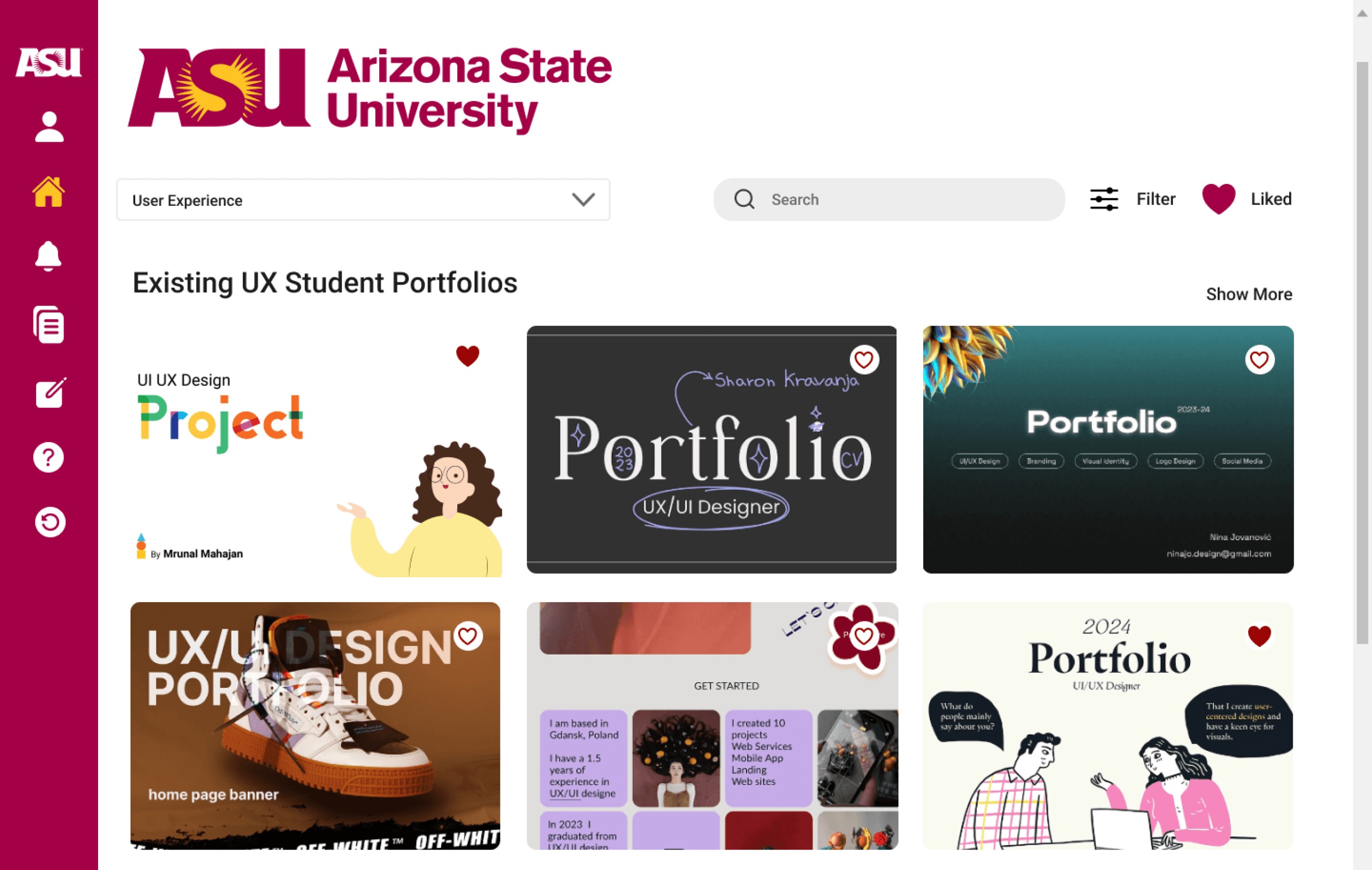
High Fidelity Vision :)
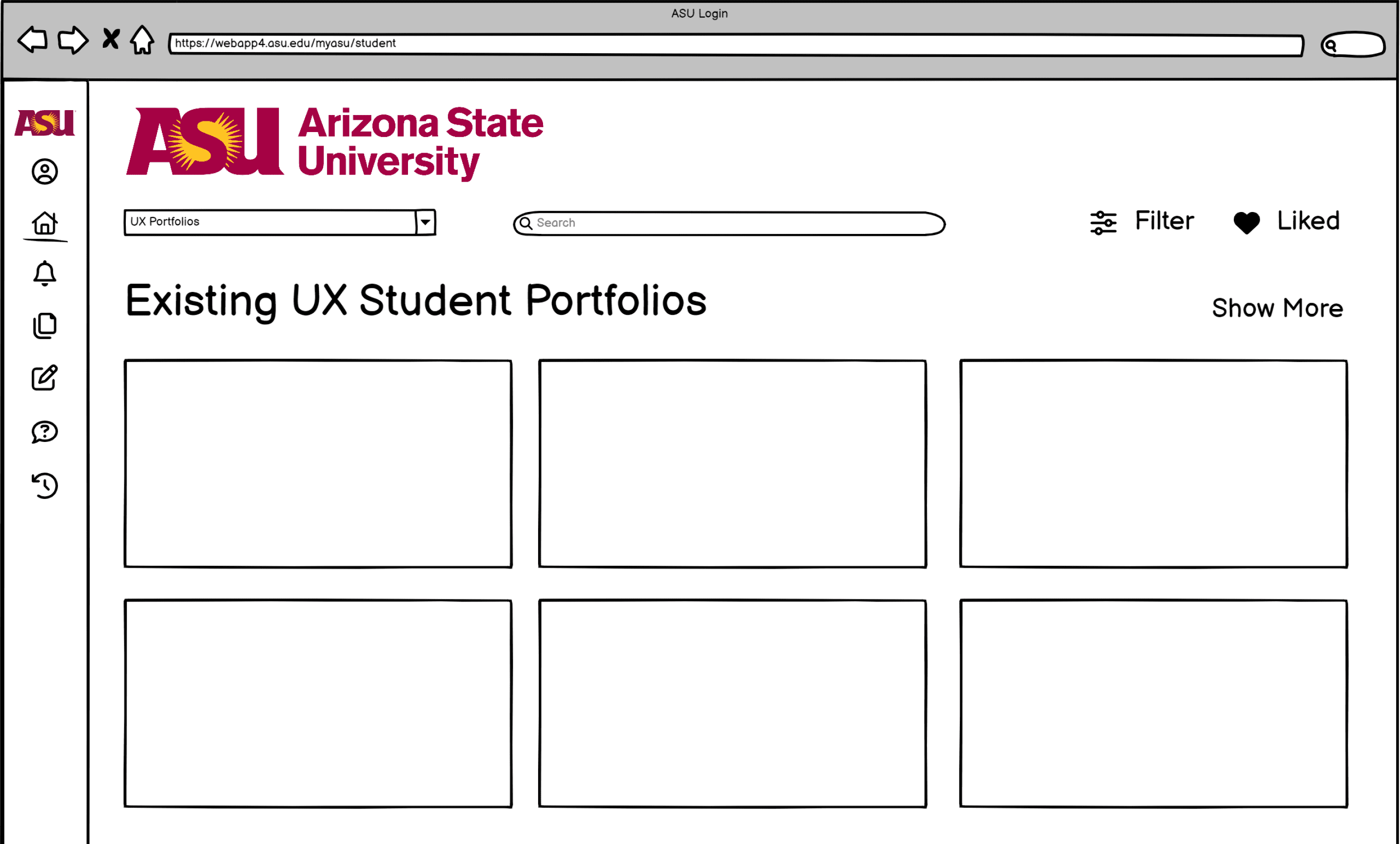
Low Fidelity Wireframes
I had the wonderful opportunity to present my ASU UX case study as a poster at the Student Showcase. Guided by my mentor, Prof. Andrew Mara, I shared key insights from my research, highlighting the challenges UX students face in finding relevant portfolio resources.
Showcasing UX Innovation
Enhancing Portfolio Accessibility for Students
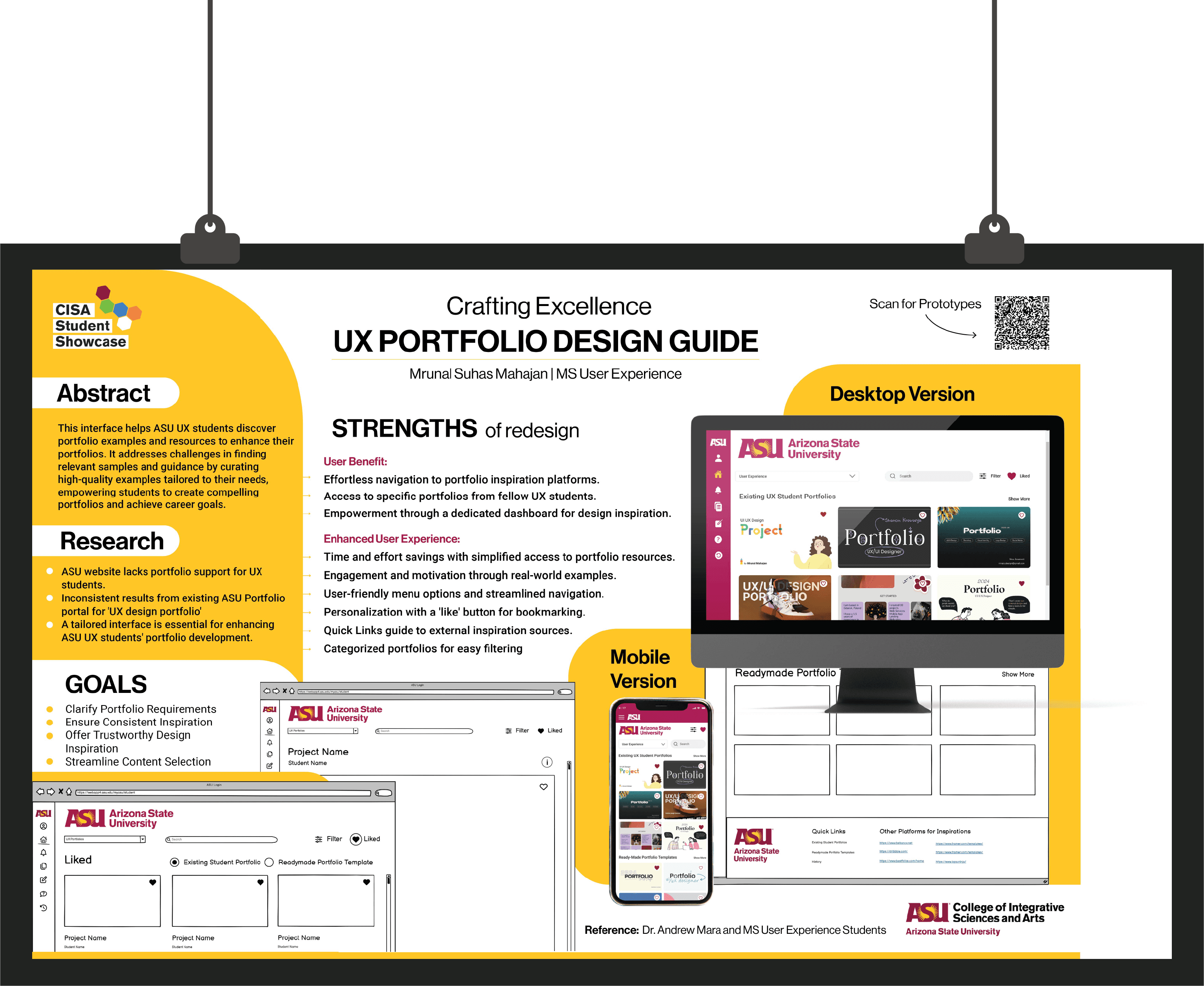
Project Showcase

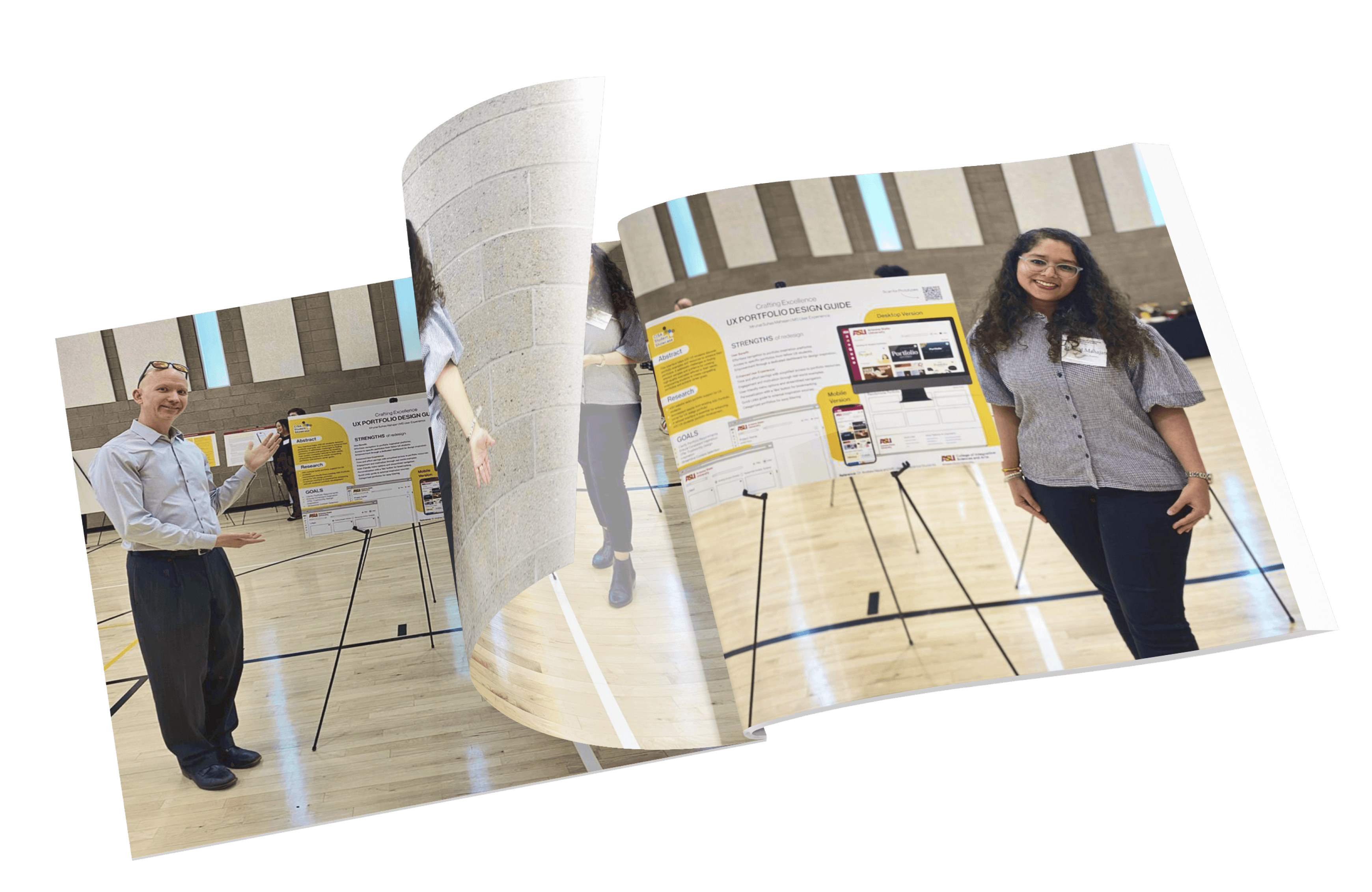
During the showcase, I engaged with attendees, explaining my project's impact and benefits in a concise and compelling manner. This experience allowed me to refine my presentation skills while advocating for a more accessible and user-friendly portfolio resource for UX students.
- A Graduate UX Student
"The template filters saved me over two hours compared to other websites, providing ample inspiration and redesign templates."
01
Explore Other Projects
Open to work

The UX Portfolio Study at ASU
Crafting Excellence
Name
Arizona State University
Domain
Education
Timeline
4 months
Role
UX Researcher & UI Designer
Tools
Project Overview
ASU’s UX graduate students lacked a unified platform to access portfolio-building resources, mentorship, and industry-aligned design templates. This fragmented ecosystem led to inconsistent portfolio quality, reduced confidence in job applications, and missed networking opportunities.
I spent hours switching between Behance, Dribbble, and Slack just to find inspiration and feedback. It felt like ASU left us to figure it all out alone.
- A graduate student
Objectives
Identify pain points and frustrations in ASU student’s portfolio development journey.
Propose a centralized digital portal integrating resources, feedback channels, and templates.
Test the prototype’s usability and alignment with student needs.
Result

100% completed tasks in <4 minutes.
50% reduction in time spent searching for resources.
30% increase in portfolio submission rates for internships.
Empathize
Define
Ideate
Prototype
Research and Design
Redesign Process

Empathize
Define
Ideate
Prototype
Test
User Research
Semi-Structured Interviews
Data Synthesis
Journey Mapping
Brainstorming
Information Architecture
Wire- framing
High-Fidelity Prototype
Usability Testing
Reflect and Reiterate
Research Methodology
We employed a mixed-methods approach combining semi-structured interviews contextual inquiry, and competitive analysis
Empathize
Understanding the User Landscape
User Research
We initiated the process with a comprehensive user research phase, aiming to deeply understand the experiences, frustrations, and aspirations of UX students at ASU.
Semi-Structured Interviews
Conducted in-depth interviews with 6+ participants from the UX program. Gathered individual perspectives, experiences, and specific challenges in UX design.
Contextual Inquiry
Observed students using 7+ external platforms (Pinterest, UX Planet) for inspiration, leading to cognitive overload, struggled to apply styles coherently.
Observations
One participant bookmarked 23 design portfolios but struggled to apply styles coherently.
Another participant initially texted 30+ peers and mentors but, became frustrated due to delayed feedback.
Key Findings
4/6 participants struggled to find ‘trustworthy design inspiration’ beyond Behance/ Dribbble.
3/6 highlighted the absence of ASU-specific guidelines or templates.
5/6 requested centralized feedback systems.
- Graduate UX Researcher
"It became clear that students felt adrift, searching for guidance in a sea of generic online portfolio resources.
“
“